Author: DogsBlogSS Team
⚠️ Disclaimer: This article is for informational purposes only and is not a substitute for consulting a veterinarian.
red doberman
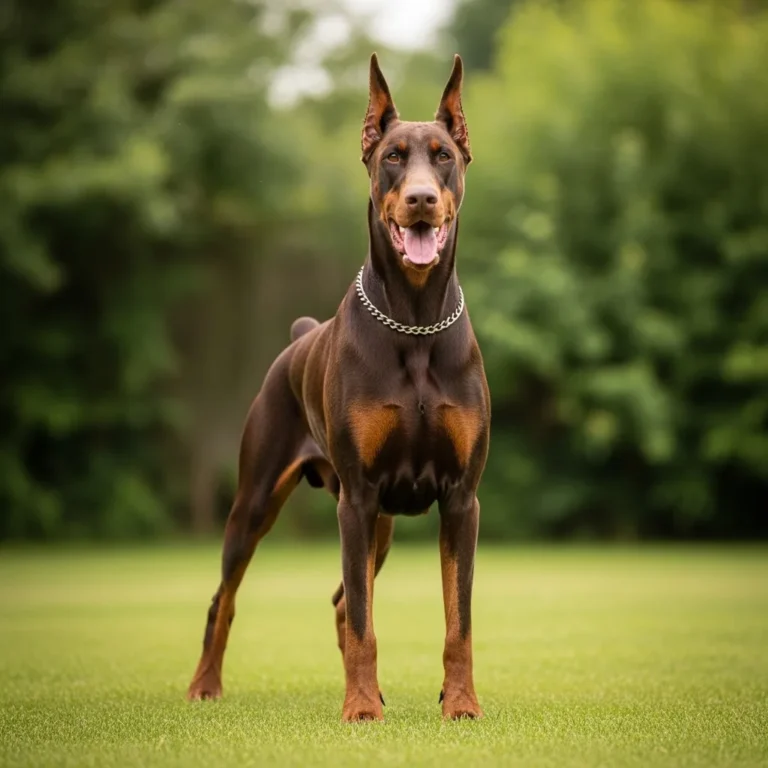
Imagine meeting a Doberman with a warm, coppery coat — more like a rich chestnut than the sleek black we often picture. That’s a Red Doberman: same proud build, same muscular stance, but with a different flair. Many people see one for the first time and think, “Wow — I had no idea Dobermans could look like this.” For anyone considering one, or just curious, this article dives deep into what a Red Doberman really is, how it compares to “standard” colors, and what you should know if you fall in love with that reddish sheen.
General Overview & Rarity
Is a Red Doberman a separate breed or just a color variation?
According to petscare, The Red Doberman isn’t a separate breed — it’s simply a color variation of the well‑known Doberman Pinscher. Its reddish hue comes from genetics, not a different lineage.
According to Wikipedia,According to coat‑color genetics: the “B” gene determines whether a Doberman is black or red, while a separate “D” gene controls whether the pigment is diluted. In the case of a Red Doberman, the dog carries two recessive “b” alleles (bb) — so the base color becomes red instead of black (B).
Thus, a red doberman dog is fully Doberman — same breed, same heritage — just with a different expression of pigment.
How rare is a Red Doberman compared to a Black and Rust one?
According to Doberman Planet+,Red and rust is the second most common coat among Dobermans, but still much less common than the classic black & rust.
According to petscare,Some sources place black & rust as representing roughly 70–80% of Dobermans, with red & rust around 15–25%.
So while you won’t call them “rare like a unicorn,” Red Dobermans are noticeably less frequent — which is part of their appeal.
What is the difference between a Red Doberman and a “Chocolate” or “Brown” Doberman?
According to wonder doberman,In many dog breeds, “chocolate” or “brown” refers to similar pigment shifts. In Dobermans, what some call “brown” or “chocolate” is in fact the “red” coloration (red & rust), genetically speaking.
According to Dog Coat Genetics,The name “red” can sometimes be misleading — their coat often ranges from a deep reddish‑brown to lighter copper shades, rather than a bright or fiery red.
So if you see “chocolate” or “brown” Doberman in a breeder’s ad, they are likely referring to a red & rust Doberman by standard terminology.
Are Red Dobermans accepted by major kennel clubs (AKC/FCI) for show?
According to dpca,Yes — the coat color red & rust is one of the recognized standard colors for Dobermans under major breed organizations. For example, the American Kennel Club (AKC) accepts it alongside black, blue, and fawn (Isabella) variants.
According to dogwellnet,Similarly, under European standards (such as those of the Fédération Cynologique Internationale, FCI), “brown” (which corresponds to red/rust) with rust markings is accepted.
So — you can show a Red Doberman in conformation events where the standard allows red/rust.
Do Red Dobermans cost more than standard Black Dobermans?
According to Doberman Planet,Because Red Dobermans are less common, they sometimes fetch a premium — partly due to their perceived “rarity” and demand among people seeking something different. Many Doberman‑related breeder guides show overlapping price ranges with black & rust Dobermans, suggesting that cost depends far more on lineage, health clearances, and breeder reputation than purely on coat color.
That said — in your hunt for a puppy — you might see Reds priced slightly higher, especially if the color is rare in your region, or if the breeder highlights exotic coat aftercare or uniqueness.
Temperament & Behavior
One of the most common questions: does the red coat color affect personality? Let’s dig in.
Are Red Dobermans more aggressive or calmer than Black Dobermans?
According to petscare,In short — there’s no solid scientific evidence that coat color determines temperament. As the folks at Petscare note, a Red Doberman “shares the same temperament as any standard Doberman Pinscher” — loyal, protective, intelligent, and energetic.
According to barklebee,That said, some owners and breeders report that their Reds seem slightly more easygoing or “laid-back” compared to their black counterparts, who may appear more intense or driven.
According to petscare,These anecdotal observations may reflect individual dogs, breeding lines, or owner expectations more than any true color-based behavioral trait. As experts in canine behavior often point out — temperament is shaped far more by genetics, upbringing, training, and environment than by coat color alone.
Is it true that Red Dobermans are more sensitive or “soft” in nature?
According to barklebee,Again — no scientific studies conclusively link coat color to sensitivity or emotional tone. Red Dobermans are often described by owners as affectionate, calm around family, and slightly less high-strung.
But other owners report their Reds as energetic or even excitable — showing strongly that personality varies widely even among the same color. As one Reddit community member put it:
“I don’t think you can beat a classic! I find the black coat is always a bit better quality. My blues coat feels very course in comparison the blacks are always like fine silk.”
So, while many Reds may seem “softer,” it’s wise to treat each dog as an individual.
Do Red Dobermans make good family pets and get along with children?
According to petscare,Yes — provided they are well‑bred, properly socialized, and given consistent training. Red Dobermans retain all the core personality traits Dobermans are known for: loyalty, protectiveness, intelligence, and strong bonds with their families.
Their sometimes‑reported more relaxed demeanor can make them especially good for families or homes where a slightly calmer temperament is preferred. That said — like any large, energetic breed — they benefit from early socialization and clear boundaries.
Are they prone to Same-Sex Aggression (SSA) like other Dobermans?
There is no credible source linking red coat color to same-sex aggression (SSA) in Dobermans. Behavior issues in Dobermans — including aggression — usually trace back to lineage, socialization, training, and environment, not coat color.
While some online forums and anecdotal stories may mention Red Dobermans being “softer” or less aggressive, that’s a function of individual temperament and upbringing rather than pigmentation.
Do Red Dobermans have higher energy levels than other colors?
According to petscare,Not inherently. Red Dobermans, like other Dobermans, are known for their energy, drive, and need for physical / mental stimulation.
Because coat color doesn’t genetically dictate activity level, some Reds are energetic, others more calm — much like Blacks or other colors. What really shapes energy is genetics (beyond coat color), upbringing, training, and environment.
Health & Genetics
For anyone thinking of welcoming a Red Doberman into their home, understanding the genetic and health aspects is absolutely crucial.
Do Red Dobermans have more health problems than Black Dobermans?
According to petscare,In general — no strong evidence suggests that Red Dobermans suffer more health issues just because of their color. Standard Doberman health concerns — such as dilated cardiomyopathy (DCM), hip dysplasia, or von Willebrand’s disease — apply across all color variations.
According to barklebee,However — some sources do note anecdotal trends that Reds might show slightly increased skin sensitivity or predisposition to dermatitis compared to Blacks.
According to petscare,That said, many of the more serious skin problems tend to be linked to dilute coat colors (like blue or fawn), not the standard red & rust.
What skin conditions are Red Dobermans specifically prone to (e.g., acne, hair loss)?
According to dpca,Because Red Dobermans are not dilute (they typically carry the dominant “D” gene for full pigment intensity), they are less at risk for certain conditions tied to dilution — such as Color Dilution Alopecia (CDA).
According to barklebee,That said, anecdotal reports and breeder‑focused guides mention mild skin sensitivity or occasional dermatitis in some Reds — especially under stress, during hot weather, or if diet or grooming is neglected.
It’s wise to monitor skin health, especially if your Doberman spends lots of time outdoors or in harsh climates.
Is Color Dilution Alopecia (CDA) a risk for Red Dobermans?
According to petscare,Not as long as the Doberman carries the normal pigment (“D”) and isn’t a dilute (d/d) at the “D” locus. CDA is strongly associated with dilute coat colors — notably blue & rust or fawn (Isabella) — not standard red & rust.
According to live.orivet, blue Dobermans have up to 90% chance of developing CDA; fawn Dobermans (dilute red) show similarly high risk.
So, a properly bred Red Doberman (non-dilute) is generally not at the same level of risk for CDA as blue or fawn ones — which is reassuring for health‑conscious owners.
What is the average lifespan of a Red Doberman?
Since coat color doesn’t significantly alter basic health risks, a Red Doberman’s lifespan is essentially the same as any Doberman — typically around 10 to 13 years, depending on genetics, care, and overall health. Many Doberman health guides don’t break lifespan down by color.
That said, consistent vet checkups, heart screening (for DCM), joint care, skin care, and a good diet all help — and those apply equally to Reds, Blacks, Blues, or Fawns.
Are they more sensitive to the sun or cold weather due to their coat color?
According to DOBERMANS AND DANES,Because their coat is lighter than a jet‑black Doberman’s, Reds may fare slightly better in hot, sunny climates — less heat absorption by dark pigment — but at the same time, some owners warn about increased skin sensitivity or sun-related dryness.
That said, their short, sleek coat and typical Doberman body type don’t make them especially cold-hardy; like any Doberman, they appreciate shelter, shade, and moderate climates.
What is the “Z” factor in Dobermans, and does it affect Reds?
IAccording to DogWellNet,n some Doberman literature, a “Z‑listing” refers to dogs with color genetic variants — especially when the dog’s pigmentation is diluted or abnormal (e.g., ‘white’ Dobermans) — and such dogs may be music‑with respect to breeding pedigree or show eligibility.
However, since Red Dobermans are part of the standard color palette (red & rust), they typically do not get a “Z” listing. That’s more associated with nonstandard or disqualified colors — for example, extreme dilutes, albino mutations, or melanistic variants.
So if your Red Doberman has full, correct pigmentation and standard rust markings, the “Z” factor shouldn’t apply.
Appearance & Physical Traits
Understanding what to expect when you meet — or adopt — a Red Doberman in person.
Do Red Dobermans have different eye colors than Black Dobermans?
According to Dog Coat Genetics,Generally, no. Eye color in Dobermans tends to be dark — brown or deep brown — regardless of coat color. The coat pigmentation difference affects coat and sometimes nose or lip color, but not typically eye color.
So expect the same expressive, alert Doberman eyes whether the coat is black or red.
Will a Red Doberman’s coat color change or fade as they age?
According to Doberman Planet,Most Red Dobermans maintain their reddish‑brown coloration throughout adulthood. Their coat may darken or lighten slightly depending on genetics and exposure to sun or environment — but significant color change (e.g., turning black or tan) doesn’t occur if they are correctly pigmented.
That said, in some poorly bred or dilute‑gene‑carrying lines, pigment dilution might lead to fading — but that’s not typical for a standard red & rust.
How big do Red Dobermans get (height and weight)?
Their size is essentially the same as other Dobermans. According to breed data:
- According to petscare,Males typically stand around 26–28 inches (66–71 cm) at the shoulder.
- According to petscare,Females usually stand 24–26 inches (61–66 cm).
- According to petscare,Weight varies, often in the 60–100 pounds (27–45 kg) range, depending on sex, build, and lineage.
According to petscare,Physically, a Red Doberman is no different from a Black Doberman — same athletic, muscular build, same refined head and graceful yet powerful frame.
Can two Black Dobermans produce a Red Doberman puppy?
According to Wikipedia,Typically, no — because red coat requires two recessive “b” alleles (bb), whereas a black & rust Doberman usually has at least one dominant “B” allele.
That said — if both black Dobermans carry the recessive red gene (i.e., are “carriers”), then there’s a genetic possibility for red puppies. But it depends on their genotype. Responsible breeders often use genetic testing to know for sure.
In short: two black parents can potentially produce a red pup — but only if both are carriers of the red gene.
Care & Grooming
A Red Doberman’s coat — beautiful as it is — has a few particularities. Here’s how to treat it right.
What is the best way to care for a Red Doberman’s sensitive coat?
According to petscare:
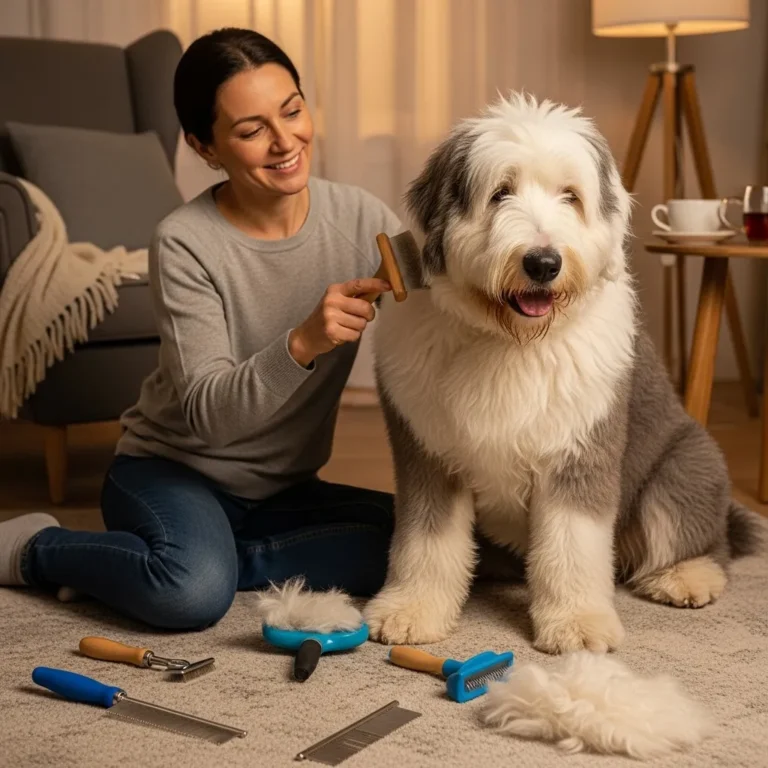
Because their coat is short, smooth, and lies close to the body, grooming is not especially demanding. Most Red Dobermans do fine with:
- Weekly brushing to remove loose hair and keep the coat smooth and shiny
- Routine ear cleaning (Dobermans often have natural ears)
- Monthly nail trimming and regular dental care (as with any dog)
If your Red Doberman spends a lot of time outdoors — especially in sunny or hot climates — adding a light doggy sun‑shade, limiting long sun exposure, or even applying pet-safe sun protection (on nose/ears/skin) can help preserve coat health and prevent dryness or irritation.
What is the best diet to maintain the richness of their red coat?
According to SpiritDog Training,While no diet can change their pigment, a high-quality, balanced diet helps maintain healthy skin and a glossy coat. Many Doberman owners recommend diets rich in omega‑3 and omega‑6 fatty acids (fish oil, quality dog food with good fats) to support skin health — which matters especially if your dog has any skin sensitivity.
If possible, choose food formulated for large breeds, with joint support, and monitor weight — Dobermans are muscular, active, and need nutrition to match their energy levels.
Do Red Dobermans shed a lot?
According to DOBERMANS AND DANES,Not more than other Dobermans. Their short coat sheds moderately, and because of the color — reddish‑brown rather than stark black — shedding may be less visually obvious than on darker coats. Regular brushing helps keep hair under control.
How much exercise does a Red Doberman actually need daily?
According to petscare,Like all Dobermans, Reds are active, intelligent dogs. Most experts recommend at least 1 hour of physical exercise daily, combined with mental enrichment (training sessions, scent work, games, walks).
They thrive with routines: a mix of jogging or long walks, playtime, and interactive training can keep them healthy, balanced, and happy.
Myths & Misconceptions
Let’s unpack some common rumors and clarify what’s real — and what’s just internet noise.
What is a “Warlock” Doberman, and is a large Red Doberman considered one?
The term “Warlock Doberman” is not a formal or recognized classification. It tends to show up in marketing or informal discussions — often used to make a Doberman sound more exotic or rare, sometimes implying unusual size, color, or temperament. There is no breed standard, kennel club recognition, or genetic basis for “Warlock” as a valid subtype.
A large Red Doberman is simply a well-sized Doberman with a red & rust coat — not a “Warlock.” If you encounter breeders using that term, be cautious: marketing buzzwords sometimes mask irresponsible breeding or exaggeration.
Are Red Dobermans harder to train than other colors?
According to petscare,No. There’s no evidence that training difficulty correlates with coat color. Training success depends on consistent, positive reinforcement, early socialization, and the individual dog’s personality. As with temperament, coat color has little to do with work ethic, obedience, or learning ability.
That said, because some people perceive Reds as “softer” or more laid‑back, they may assume Reds need gentler training — but that’s a personal preference, not a necessity.
Conclusion — Is a Red Doberman Right for You?
If you’re drawn to the beauty of a Doberman but want something a little different from the classic black & rust — a doberman red can be a deeply rewarding choice. They offer the same loyalty, intelligence, athleticism, and protective instincts, wrapped in a warm, rich coat that stands out.
Because red & rust is an official, accepted coat color, a well-bred Red Doberman from a reputable breeder has the same potential for health, temperament, and longevity as any standard Doberman — maybe with a bit more shine under the sun and a bit of admiration from people noticing that beautiful color.
As always, whichever color you go for: prioritize responsible breeding, health testing, good diet, proper socialization, and regular exercise. Do your homework. Meet the parents if possible. And if everything clicks — you might just bring home not only a gorgeous dog, but a loyal friend for years to come.
Notice : The DogsBlogSS editorial team is dedicated to providing accurate, research-based information about dog health, behavior, and care. All our articles are fact-checked using trusted veterinary sources such as VCA Hospitals, Merck Vet Manual, and the AKC.
you may like it