
Author: DogsBlogSS Team
⚠️ Disclaimer: This article is for informational purposes only and is not a substitute for consulting a veterinarian.
king alsatian
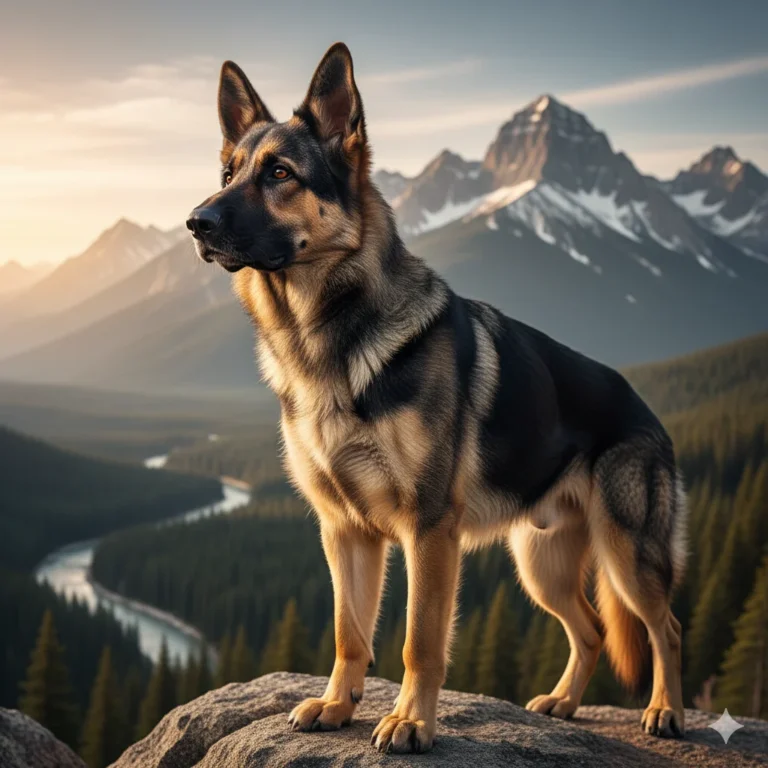
Every now and then, you hear a dog lover mention a “King Alsatian,” usually with a spark in their eyes, as if describing a legend more than a breed. The name alone suggests something majestic—bigger, stronger, calmer, almost royal compared to the typical German Shepherd. But what exactly is a King Alsatian? Is it an official breed? A larger bloodline? Or simply a nickname that breeders and owners use when they meet a German Shepherd that seems to have been built on a grander scale?
As someone who has spent many hours talking with breeders, trainers, and veterinary experts, I’ve learned that the world of Shepherd-type dogs is filled with history, passion, and—sometimes—a bit of confusion. This article walks you through everything you need to know about the King Alsatian.
Whether you’re thinking of bringing home one of these gentle giants or you’re simply curious about what sets them apart, this guide has you covered.
Definition & Identification (The Basics)
What exactly is a “King Alsatian”?
The term “King Alsatian” isn’t officially recognized in any kennel club registry. Instead, it began as a popular nickname for a German Shepherd that appears particularly large—often taller, more heavily boned, or sporting a long and plush coat.
To clarify:
- “Alsatian” is simply the older British name for the German Shepherd Dog.
- “King Alsatian” = a very large German Shepherd, usually bred from oversized bloodlines or long-coated lines.
Some breeders use the term honestly, while others use it as a marketing label to sell oversized puppies. This is why canine expert Dr. Karen Becker, DVM advises buyers to always research breeders carefully and prioritize health screening over size.
Is a King Alsatian the same as a King Shepherd?
Not exactly.
A King Shepherd is a real hybrid breed, developed in the 1990s by Shelley Watts-Cross and David Turkheimer. It blends:
- German Shepherd
- Shiloh Shepherd
- Alaskan Malamute
- Occasionally Great Pyrenees
It is recognized by the American Rare Breed Association (ARBA) .
A King Alsatian, meanwhile, may simply be:
- An oversized German Shepherd
- A long-haired GSD
- A GSD bred from large-lineage parents
So while the names sound alike, the dogs behind them may be quite different.
Is the King Alsatian recognized by the AKC (American Kennel Club)?
No.
The American Kennel Club recognizes only the German Shepherd Dog breed standard
So, if someone claims to sell an AKC-registered King Alsatian, that’s a red flag. They may be selling German Shepherd puppies that happen to be large, but the AKC will only register them as German Shepherd Dogs—never as King Alsatians.
Comparisons (King Alsatian vs. Standard German Shepherd)
What is the main difference between a King Alsatian and a standard German Shepherd?
A typical German Shepherd is bred according to a carefully defined standard—usually emphasizing structure, temperament, and working ability.
A King Alsatian, however, usually differs in:
- Size: selectively bred for height and mass
- Coat: often long-haired
- Bone structure: heavier and more substantial
- Temperament: often calmer due to selective breeding
Renowned German Shepherd expert Fred Lanting, author of The Total German Shepherd Dog, explains that deliberate breeding for extra-large GSDs has been around for decades—but should be done responsibly to avoid joint issues.
Is a King Alsatian larger than a standard German Shepherd?
Almost always, yes.
A standard AKC male German Shepherd stands:
- 24–26 inches (60–66 cm)
- 65–90 pounds (29–41 kg)
A typical King Alsatian (unofficially) stands:
- 27–31 inches (68–79 cm)
- 100–150 pounds (45–68 kg)
Oversized? Yes.
Impressive? Absolutely.
Official? No.
Do King Alsatians have a different temperament than regular Alsatians?
Many owners describe King Alsatians as calmer, more gentle, and somewhat less intense than high-drive working-line German Shepherds.
Working-line GSDs (police, sport, military) are often extremely energetic, alert, and driven.
Oversized lines are usually bred more for:
- Companionship
- Even temperaments
- Family suitability
Canine behavior researcher Dr. Nicholas Dodman, DVM, from Tufts Cummings School of Veterinary Medicine notes that temperament differences often come from selective breeding, not size alone.
Physical Characteristics
How big do King Alsatians get (Height and Weight)?
Males:
- Height: 28–31 inches (71–79 cm)
- Weight: 110–150 pounds (50–68 kg)
Females:
- Height: 26–29 inches (66–74 cm)
- Weight: 90–120 pounds (41–54 kg)
While not every dog reaches the upper end of these numbers, most King Alsatians exceed standard GSD size.
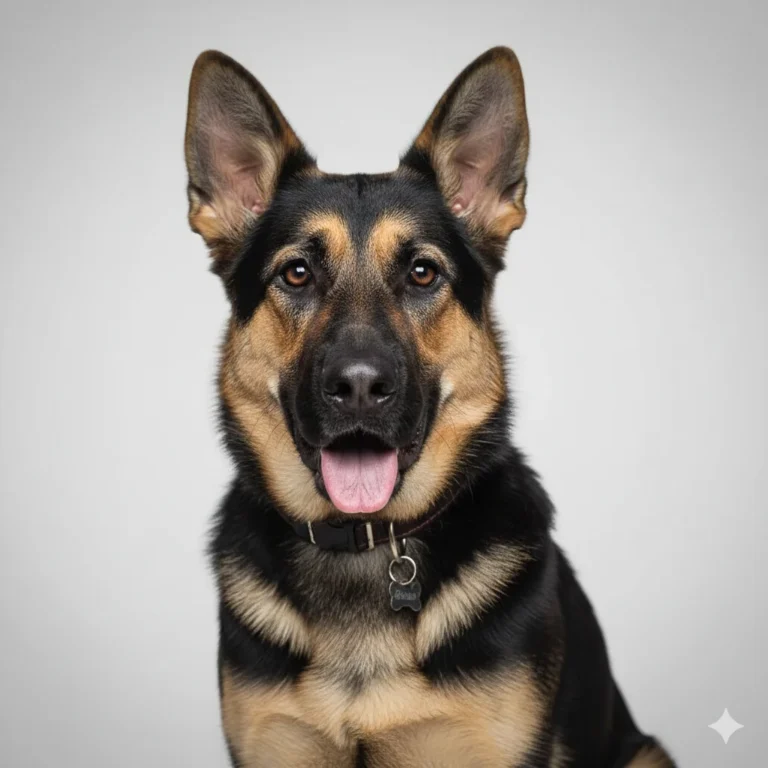
What does a King Alsatian look like?
King Alsatians tend to have:
- A long, plush coat (common in oversized lines)
- A powerful, broad chest
- A gentle expression
- Feathering around the tail and legs
- A large, noble head
Common colors include:
- Black & tan
- Sable
- Bi-color
- Solid black
- Black & red
Their appearance often resembles the long-haired German Shepherd, but with heavier build.
Temperament & Family Suitability
Are King Alsatians good family dogs?
Absolutely—when properly trained and socialized.
These gentle giants are known for:
- Loyalty
- Calmness
- Strong protective instincts
- Patience with children
- Strong bonding to their families
Dr. Stanley Coren’s research on canine intelligence ranks the German Shepherd at #3 in overall working intelligence, meaning they learn quickly and reliably. Oversized lines typically retain this intelligence, just with a slightly more laid-back energy.
Are King Alsatians aggressive or dangerous?
Their size might intimidate some people, but the breed itself is not tied to aggression.
Aggression usually stems from:
- Poor training
- Lack of socialization
- Fear
- Irresponsible breeding
Reputable dog behaviorists, including Victoria Stilwell , emphasize that temperament depends far more on upbringing and environment than breed labels.
A well-raised King-Alsatian is loyal, protective, and trustworthy.
How do King Alsatians behave around children and other pets?
With good socialization, they tend to be:
- Gentle with children
- Patient
- Playful
- Calm around other pets
Because of their size, supervision is important—especially around toddlers who might be accidentally knocked down by an enthusiastic giant.
Health & Lifespan
What is the life expectancy of a King Alsatian?
Oversized breeds often have slightly shorter lifespans.
A standard GSD typically lives 10–13 years.
A King-Alsatian usually lives 8–11 years.
Long-coated lines, however, sometimes trend toward the longer end if responsibly bred.
What are the common health issues associated with King Alsatians?
According to dog artists and canine journal :
Because they’re large and heavy, they may face:
- Hip Dysplasia
- Elbow Dysplasia
- Degenerative Myelopathy
- Bloat (Gastric Dilatation–Volvulus)
- Osteoarthritis
- Panosteitis in young dogs
- Von Willebrand’s Disease
The Orthopedic Foundation for Animals (OFA) recommends breeders screen for:
- Hips
- Elbows
- Cardiac health
- Thyroid function
- Genetic diseases
Good breeders willingly show you proof.
Care & Maintenance
How much exercise does a King Alsatian need?
Though calmer than working-line GSDs, they still need daily activity, including:
- 60–90 minutes of exercise
- Walks + controlled play
- Mental stimulation
- Training sessions
Too little exercise can lead to weight gain or anxiety.
Do King Alsatians shed a lot?
Yes—especially if long-coated.
Expect:
- Heavy seasonal shedding (“blowing coat” in spring/fall)
- Moderate daily shedding year-round
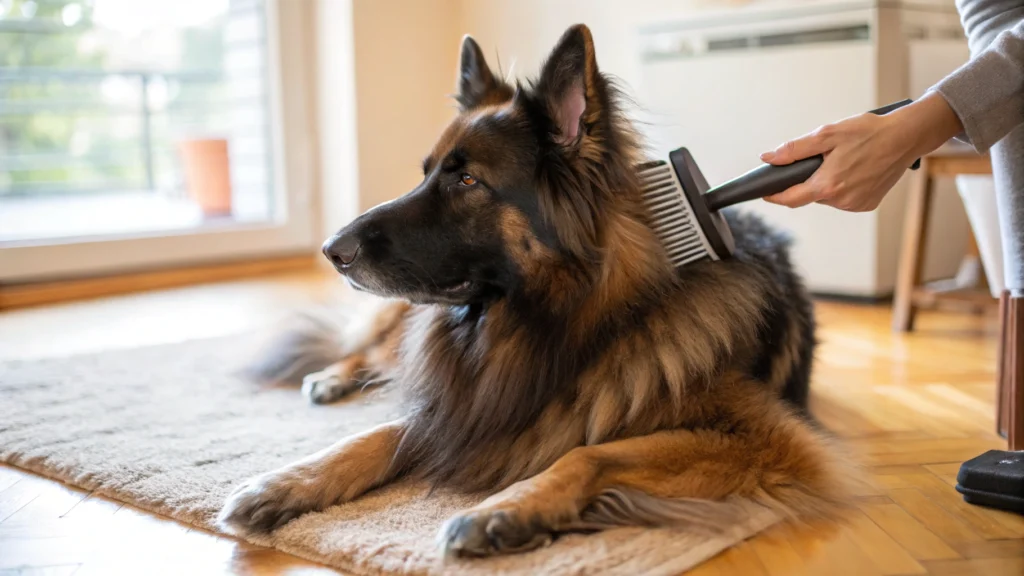
- Weekly brushing (or more for long coats)
Professional groomers like those at American Kennel Club Grooming Resources recommend tools like:
- Slicker brushes
- Deshedding combs
- Undercoat rakes
Is a King Alsatian suitable for apartment living?
Generally no, unless:
- The owner is highly committed
- Daily outdoor time is guaranteed
- The dog is calm and well trained
Their size alone makes small spaces challenging. A house with a yard is much more suitable.
Cost & Acquisition
How much does a King Alsatian puppy cost?
Because this isn’t an official breed, prices vary widely.
Typical ranges:
- $1,200–$3,500 for oversized German Shepherd lines
- $2,000–$5,000+ for King Shepherds (which some people confuse with “King-Alsatians”)
Factors affecting price:
- Pedigree
- Health testing
- Coat type
- Breeder reputation
- Size of lineage
Always prioritize health testing over size.
Avoid breeders who:
- Cannot show OFA results
- Use only buzzwords like “giant,” “extra large,” or “rare”
- Refuse visits or video calls
Notice : The DogsBlogSS editorial team is dedicated to providing accurate, research-based information about dog health, behavior, and care. All our articles are fact-checked using trusted veterinary sources such as VCA Hospitals, Merck Vet Manual, and the AKC.
you may like it