Author: DogsBlogSS Team
⚠️ Disclaimer: This article is for informational purposes only and is not a substitute for consulting a veterinarian.
how to remove a tick from a dog
Finding a tick on your dog can feel scary — it’s one of those “yuck, I hope you’re okay little buddy” moments. But if you stay calm and act quickly, you can remove the tick safely and minimize the risk of disease. Think of it as giving your dog a small rescue mission: a little discomfort now in exchange for a lot of peace of mind later.
Ticks don’t just annoy dogs — they can sometimes transmit illnesses or cause infections. That’s why it’s extra important to remove them carefully, using the right tools and method. In this article, I walk you through everything: from what you need before you start, to the safest way to pull a tick out, what not to do, and how to care for your dog afterward.
Preparation & Tools
Before you even try to touch the tick, it’s best to pause and prepare. Think of it like prepping for a delicate job — because it kind of is.
What is the best tool for removing a tick from a dog? (Tweezers vs. Tick Twister/Key)
According to PetMD:
According to PetMD — a trusted online resource for pet health — the safest tools for tick removal are fine-tipped tweezers or a specialized tick removal tool (for example, a “tick key,” “tick twister,” or a “tick removal hook”) that you can pick up at pet supply stores.
Using a tick tool can make things easier, especially if the tick is small or the area is hard to reach (like behind an ear or between toes). If you use tweezers: aim to grip the tick as close to your dog’s skin as possible, and gently but firmly pull — don’t squeeze the body.
Some vets also recommend tools like the “Tick Tornado,” which are designed to hook under the tick and lift it out safely.
Can I remove a tick with my bare fingers? (Risks of touching a tick)
According to San Francisco SPCA and petsmart:
It might seem tempting — especially if you don’t have tweezers — but using bare fingers is risky. Ticks can carry bacteria or viruses, and by handling them directly you could expose yourself to those pathogens. Even if it’s just a dog, ticks don’t care where they bite.
Moreover, when you use your fingers, it’s easy to squeeze the tick’s body. That can push infected fluids from the tick into the bite site or cause the tick’s mouthparts to break off and stay embedded — up-close contact is just too risky.
So gloves, tweezers, or a tick tool are highly recommended.
Do I need to shave my dog’s fur before removing a tick?
Not always. But if your dog has long or thick fur — or the tick is hidden in a dense patch (like under the belly, near the tail, or around the neck) — trimming or parting the fur carefully can help you get a clear view. That makes it easier to grab the tick close to the skin and avoid accidental skin pinches or incomplete removal.
According to Centers for Disease Control and Prevention, In many cases, though, simply parting the fur with your fingers or using a comb is sufficient to expose the tick. For instance, pet-check guidelines from Centers for Disease Control and Prevention (CDC) recommend running your fingers gently over your dog’s coat to feel for bumps, then parting the fur as needed to inspect any suspicious spots.
If you anticipate regular tick exposure (e.g., your dog spends a lot of time outdoors, in tall grass or wooded trails), keeping the coat trimmed — especially in problem areas — may make routine checks simpler.
The Removal Process
Here comes the heart of it: how to actually get that tick off without causing more harm than good.
What is the safest step-by-step method to pull a tick out?
According to PetMD and Chewy and PetMD+1:
Based on veterinarian-approved guidance (e.g., from PetMD and other pet-care resources), here’s a step-by-step breakdown:
- Put on gloves. If you have latex or rubber gloves, wear them to avoid direct contact with the tick.
- Keep your dog calm and still. Speak softly, give gentle pets, or ask a friend to help — distracting your dog with treats works well too.
- Part the fur around the tick. Use your fingers or a comb to gently move the hair aside so you can see the skin and tick clearly.
- Use your tool to grip the tick. Whether tweezers or a tick-key/twister, aim to grab as close to the skin as possible — right near the tick’s head, not its bloated body.
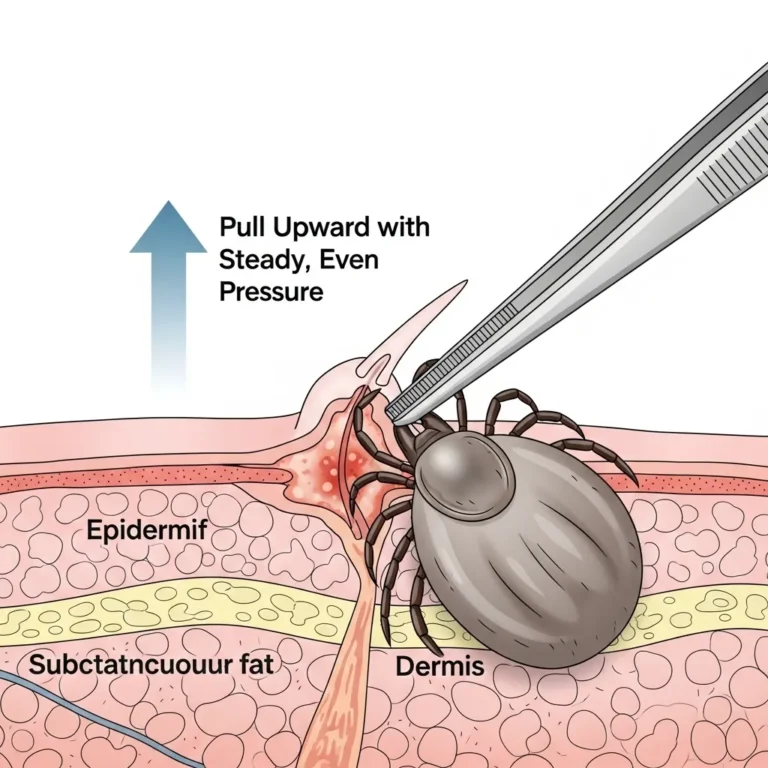
- Pull slowly and steadily straight out. Avoid any twisting, jerking or sudden movements. The goal is to pull the tick’s mouthparts out in one piece.
- Check the tick after removal. Make sure the head and mouthparts came out with the body. If part seems missing, you may want to consult your vet.
- Dispose of the tick safely. Seal it in a jar or container with isopropyl alcohol (or a zip-lock bag) — not flush it down the toilet. That also allows your vet to identify the tick later if needed.
- Clean and disinfect the bite site. Wash the area with soap and water or apply a pet-safe antiseptic; it may help to follow up with veterinarian-approved antibiotic ointment.
Which direction should I twist or pull the tick? (Clarifying the “twist vs. straight pull” confusion)
TAccording to PetMD, here’s often confusion about whether you should twist the tick or pull it straight out. The safest advice — from multiple pet-care authorities — is to pull it straight out with steady pressure.
According to petsmart Twisting or jerking can cause the tick’s mouthparts to break off under the skin, which raises the risk of irritation or infection.
If you’re using a tick-removal tool that instructs a slight rotation (some brands design them that way), follow the manufacturer’s directions carefully — but avoid aggressive twisting.
How do I keep my dog calm while removing a tick?
Ticks tend to show up at inconvenient times — like when your dog is wriggly or nervous. Here are a few practical, vet-approved tips:
- According to Chewy, Offer treats before and during the removal to distract and reward calm behavior. Many pet-care guides recommend this approach.
- Have a helper: one person gently holds and comforts the dog, the other performs the removal.
- Use gentle, soothing tones and pets to reassure your dog — think of it as giving a mini spa-moment, minus the luxury.
- If it’s your first time, choose a quiet, comfortable spot with good lighting and minimal distractions.
If your dog is especially anxious — for example, a first-time tick encounter, young puppy, or a dog with a sensitive spot — it’s perfectly fine to call your vet instead of forcing the issue.
Troubleshooting Common Mistakes
Even with the best intentions, things don’t always go smoothly. Here are some common missteps — and what you should do if they happen.
What should I do if the tick’s head breaks off and stays in the skin?
This is one of the most common and worrisome scenarios. According to the article on PetMD: if the tick’s mouthparts remain embedded after you’ve removed the body, don’t try to dig them out yourself — leave that to a professional.
According to PetMD, Why? Digging or picking at the skin can cause inflammation, further irritation, or even an infection. Instead: clean the area gently, monitor for redness or swelling, and call your vet. In many cases, the remaining parts will either work themselves out naturally, or a vet can remove them safely.
Is it dangerous if I accidentally squeeze the tick’s body?
According to petsmart, Yes — that’s one of the big “don’t do this” mistakes. Squeezing the tick can force pathogens from its gut or saliva into the bite wound, increasing the risk of infections or tick-borne diseases.
According to Pets Care, In addition, squeezing may rupture the tick, making the removal more difficult, and increasing the likelihood that parts of the tick stay behind. That’s why squeezing or crushing a tick with your fingers is strongly discouraged.
If you realize you squeezed it while it was still attached — try to stop and use tweezers or a proper tool. If in doubt, call a vet.
Myths & What NOT to Do
The internet is full of “clever tricks” to remove ticks — some are just wrong, others dangerous. Let’s debunk a few.
Does smothering a tick with Vaseline, nail polish, or alcohol work?
According to PetMD, A lot of people talk about smeared Vaseline, nail polish, or even substances like alcohol to “force the tick to back out.” But these are myths — and actually harmful. According to both pet-care guides and veterinary experts: smothering or irritating the tick may cause it to regurgitate its stomach contents (which may contain pathogens) into your dog’s skin.
So while it might seem like a quick fix, it’s a shortcut full of risk.
Should I burn the tick off with a match or lighter? (Safety warning)
According to petsmart, Definitely not. Using heat to try to make the tick retreat can result in serious harm — not just to the tick, but to your dog (or you). Heat can make the tick inject more saliva or toxins into the skin, worsen irritation, or even burn delicate skin. That’s why trusted sources strongly warn against using matches, lighters, or any kind of fire.
Also avoid other drastic “home remedy” methods like forcibly scraping, gouging, or digging the tick out — those almost always cause more harm than good.
Post-Removal Care & Disposal
You’ve removed the tick — but the job’s not over. Treatment and proper disposal are just as important.
How should I properly dispose of or kill a tick after removing it? (Flushing vs. Alcohol jar)
According to PetMD,The recommended way to kill and dispose of a tick is to seal it in a small container (like a jar or zip-lock bag) with isopropyl alcohol. That ensures it’s dead and prevents it from crawling away or biting someone else.
According to petsmart, Some people think flushing the tick down the toilet is okay — but many experts don’t recommend it, since ticks might survive or be difficult to identify later. Sealing in alcohol is safer.
If you prefer, you can also wrap the tick in tape or flush it after it’s thoroughly submerged in alcohol for a while, but only do that if you’re sure it’s dead.
How should I clean and treat the bite wound on my dog?
According to PetMD, Once the tick is gone, gently clean the bite area with mild soap and warm water. Then, apply a pet-safe antiseptic or a thin layer of antibiotic ointment (if recommended by your veterinarian). This helps prevent bacterial infection and soothes the skin.
It’s a good idea to monitor the site in the days following: look for swelling, redness, discharge, or excessive licking. Dogs often lick or scratch at bite sites — you might want to consider an Elizabethan collar (cone) if they’re persistent.
Should I save the tick for testing?
According to PetMD, Yes — and many vets encourage it. Saving the tick (in a sealed jar or bag with alcohol) can be helpful if your dog starts showing signs of illness later. The type of tick can help your vet determine whether your dog is at risk for certain tick-borne diseases. This is advice echoed by multiple pet-health sources.
Better safe than sorry: sometimes a tiny bug can carry a big problem.
Monitoring & Health Concerns
Tick removal is just the start — you also want to keep an eye on your dog after the fact.
What are the signs of Lyme disease or infection to watch for after removal?
According to WebMD:
Ticks can carry various pathogens, some of which may take days or even weeks to cause noticeable illness. According to pet-health professionals (e.g., on WebMD’s dog section), after a tick bite you should watch for symptoms like:
- Fever
- Lethargy or unusual tiredness
- Loss of appetite
- Difficulty walking or limping
- Swollen joints or reluctance to move
- Swollen lymph nodes
- Redness or discharge at the bite site
If you see any of these signs — especially in the first few weeks after a bite — it’s worth contacting your veterinarian.
When should I take my dog to the vet after a tick bite?
You don’t always need to run to the vet immediately, but you should definitely reach out if:
- The tick’s mouthparts stayed embedded after removal.
- The bite area becomes redder, swollen, oozes, or seems to bother your dog (itching, licking, pain).
- Your dog shows systemic symptoms like fever, lethargy, limping, loss of appetite, or behavioral change.
- You’re unsure if you removed the tick properly.
- You want the tick identified — especially if you live in an area known for tick-borne diseases.
Vets can help remove embedded parts cleanly and, if needed, prescribe antibiotics or other treatments to guard against infection.
Why is there a bump or scab left after removing the tick? (Normal healing vs. Infection)
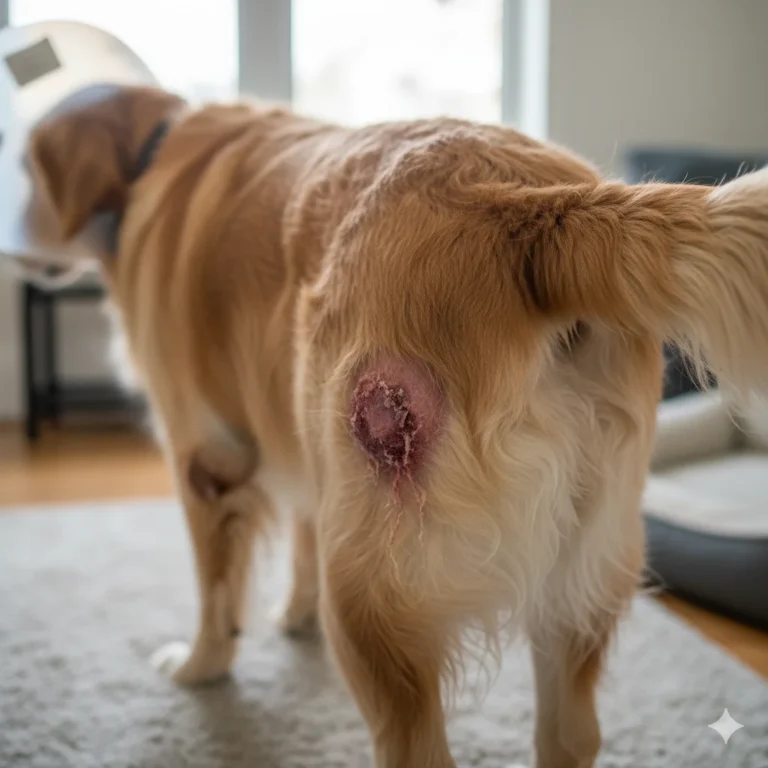
After you remove a tick, it’s totally normal for a small bump or mild redness to appear — a bit like a mosquito bite. That’s just your dog’s skin reacting to the bite itself or to the mild trauma of removal. It often heals on its own within a few days, especially if you keep it clean and dry.
However, if the bump becomes larger, redder, warm to the touch, starts leaking fluid, or seems to be painful, it could signal an infection or an allergic reaction — which means it’s time for a vet check.
Why It Matters: A Story to Keep in Mind
Let me share a quick story that might help drive this home. Imagine a dog named Bruno — a friendly stray that a neighbour rescued for a few days. One evening, they notice a dark speck near Bruno’s ear. On closer look — tick. They didn’t have tweezers, but they tried to pull it with gloved fingers. In a rush, they tugged, squeezed, and the tick came off. Relief! But what they didn’t realize was the tick’s mouthparts stayed behind under Bruno’s skin.
A few days later, Bruno started limping, seemed weak, wouldn’t eat much, and kept biting at that spot near his ear. A vet visit revealed a small infection, probably triggered by an embedded tick fragment. That little “I thought I did it fast” turned into a week of antibiotics and a lot of guilt.
Now, imagine if they had used clean, fine-tipped tweezers — grabbed the tick close to the skin — gently pulled straight out — and sealed the tick away. Maybe Bruno would’ve been perfectly fine.
Small steps, right? But that’s what this is about: showing up for your dog — no panic, just care, clarity, and calm.
The Expert Take & Final Thoughts
According to PetMD, Veterinarians stress that prompt removal is important because many tick-borne illnesses can transfer quickly — even within 24 hours of a tick latching on.
According to PetMD’s DVM team (led by Sara Bledsoe, DVM, CVA, CHPV), key tools for safe removal are fine-tipped tweezers or a specialized removal tool like a tick key or “tick tornado.”
If done correctly — gloves on, tick removed in one smooth pull, area cleaned, tick preserved in alcohol, and your dog monitored — the risk of complications is minimal.
But if anything feels off — embedded parts, persistent redness, signs of illness — don’t hesitate to call your vet. It’s always better to be safe, especially with our furry friends who rely on us entirely.
In short: stay calm, be prepared, act quickly — and give your dog a treat (or a good belly scratch) afterwards. That’s love, and that’s responsible pet care.
Notice : The DogsBlogSS editorial team is dedicated to providing accurate, research-based information about dog health, behavior, and care. All our articles are fact-checked using trusted veterinary sources such as VCA Hospitals, Merck Vet Manual, and the AKC.
you may like it