Author: DogsBlogSS Team
⚠️ Disclaimer: This article is for informational purposes only and is not a substitute for consulting a veterinarian.
dog training border collie
Border Collies are one of those dogs that leave a lasting impression the moment you meet them. They look at you with sharp, knowing eyes—as if they’re already trying to figure out what you’ll do next. Anyone who brings one home quickly realizes these dogs are not “average pets.” They’re smart, energetic, emotional, and deeply connected to their people. With the right guidance, they become extraordinary companions. Without it… well, let’s just say they’ll find their own “projects,” and you may not like those very much.
This guide walks you through everything you need to know about border collie dog training, blending practical advice, expert insights, and real-world examples. Whether you’re considering adopting one or already living with a whirlwind of fur and genius, this article will help you understand how to bring out your dog’s best qualities.
Understanding the Breed: Is a Border Collie Right for You?
Are Border Collies difficult to train for first-time owners?
Border Collies are famously trainable—but that doesn’t automatically make them easy. Their intelligence means they learn fast, sometimes too fast, picking up both good habits and unwanted behaviors in equal measure.
Dr. Patricia McConnell, respected animal behaviorist and author of The Other End of the Leash, often reminds owners that Border Collies “notice everything, even the things you didn’t mean to teach.”
For first-time dog owners, this breed may feel overwhelming. But with consistency, patience, and structured routines, they can become incredibly rewarding companions.
Why are Border Collies often described as “hyperactive” or “high-maintenance”?
It’s simple: they were bred to work all day—literally.
Generations of herding livestock across huge fields created a dog whose energy reserves seem bottomless. When they don’t have an outlet, that energy becomes frustration. That frustration becomes chaos.
Think of a Border Collie like a highly gifted child: brilliant, but easily bored.
Do Border Collies really need a “job” to be happy?
Yes, though “job” doesn’t have to mean sheep. A job can be:
- Learning new tricks
- Doing scent work
- Helping carry groceries
- Fetching items
- Participating in dog sports
- Structured daily exercise
Famed trainer Ian Dunbar, founder of the Sirius Dog Training program , emphasizes that working breeds need meaningful enrichment—not just movement, but purpose.
What is the difference between physical exercise and mental stimulation for this breed?
Physical exercise tires their muscles.
Mental stimulation tires their mind.
For a Border Collie, mental work can be more exhausting than running. Puzzle games, scent games, obedience drills, and trick training all help them settle.
If you only exercise this breed physically, you get a dog who becomes more fit… and therefore more energetic. Balance is the key.
Getting Started: The Foundations of Training
At what age should I start training my Border Collie puppy?
Immediately. Border Collie puppies start learning the day they come home—usually around 8 weeks old.
Positive reinforcement legend Karen Pryor, author of Don’t Shoot the Dog! , encourages gentle early training built around rewards, timing, and fun.
At this age, training sessions should be short, upbeat, and frequent.
What are the most essential commands to teach a Border Collie first?
Start with:
- Name Recognition
- Sit / Down
- Stay
- Come (critical!)
- Leave It
- Look / Watch Me
- Crate Cue
- Drop It
These commands build impulse control, safety, and communication.
How do I properly socialize a Border Collie to prevent future fear or aggression?
Border Collies can be motion-reactive and noise-sensitive if not socialized correctly. Introduce:
- Kids of different ages
- Calm dogs and puppies
- Different textures like grass, wood, sand
- Varying environments—parks, shops, car rides
- Controlled exposure to bicycles, strollers, runners
Use treats generously. Pair novel experiences with something positive.
What is the best way to crate train a Border Collie without causing anxiety?
Start slow:
- Feed meals in the crate.
- Leave the door open during early sessions.
- Add cozy bedding and a long-lasting chew.
- Build duration gradually.
Never use the crate as punishment. It should feel like a safe bedroom, not a jail cell.
How often and for how long should training sessions be?
Border Collies learn best with short, repeated sessions, such as:
- 5–10 minutes at a time
- 3–5 times per day
Long drilling sessions can lead to frustration. Quick, fun “learning bursts” work beautifully for this breed.
Managing Herding Instincts & Nipping
How do I stop my Border Collie from nipping at heels and ankles?
Nipping is instinctual—your puppy isn’t “bad.” They’re trying to control movement the way their ancestors did with sheep.
Try:
- Redirecting to a toy
- Using a drag line to prevent chasing
- Reinforcing calm walking beside you
- Teaching a strong Leave It cue
Never use harsh corrections; they often intensify arousal.
Why does my dog try to herd children, other pets, or even cars?
Border Collies are wired to respond to motion. Kids running, cats darting, and cars passing by all trigger that instinctive response.
Trainer Julie Hill, world-renowned sheepdog handler, teaches that herding behaviors must be redirected, not suppressed.
How can I teach my Border Collie impulse control (the “Leave It” command)?
This breed thrives on impulse-control practice. A simple method:
- Hold a treat in your closed hand.
- When your dog backs away or stops pawing, say “Yes!” and reward with a different treat.
- Build to open-hand challenges and dropping items.
Is it possible to train the herding instinct out of them, or should it be redirected?
You cannot remove instinct—it’s genetic.
But you can redirect it:
- Herding balls
- Structured fetch
- Treibball
- Scentwork
- Training games
Fulfillment, not suppression, is the secret.
Solving Common Behavioral Problems
How do I teach my Border Collie to have an “off switch” and settle down inside?
This might be the hardest lesson for many Border Collies.
Try:
- Teaching the cue “Place”
- Rewarding calm behaviors (not just active ones)
- Using decompression walks
- Giving mental games before relaxing
- Practicing calm after workouts
Calm is a skill, not a personality trait.
My Border Collie is reactive to movement (bikes, joggers, cars). How do I stop the chasing?
Use a mixture of:
- Distance (work far away from triggers)
- Counterconditioning (treat when the trigger appears)
- Focus cues (“Watch me”)
- Long-line training
- Practicing stillness and impulse control
Over time, triggers become signals for calm behavior, not chasing.
Why is my Border Collie so sensitive to noises (thunder, vacuums) and how can I help?
Border Collies often have sensitive nervous systems. Sudden or repetitive noises may overwhelm them.
Help them by:
- Desensitization videos at low volume
- Creating a “safe den”
- Using calming chews or anxiety wraps
- Pairing noise with treats
- Playing white noise during storms
Dr. Karen Overall, a veterinary behaviorist known for her Manual of Clinical Behavioral Medicine, emphasizes predictable routines to reduce anxiety.
How do I stop demand barking when my dog wants attention or play?
Demand barking works… only if you reward it.
To stop it:
- Ignore the barking completely
- Reward only quiet behavior
- Teach an incompatible cue like “Go to Bed”
- Give attention on your terms, not theirs
What should I do if my Border Collie becomes destructive when left alone?
Destruction usually comes from:
- Boredom
- Anxiety
- Lack of stimulation
To help:
- Leave puzzle feeders or Kongs
- Use baby gates instead of total freedom
- Build gradual alone-time tolerance
- Give a walk + mental work before leaving
- Use dog-sitters or daycare for long hours
If anxiety is severe, consult a certified behavior specialist from CCPDT
Advanced Training & Enrichment
What are the best brain games and puzzle toys to tire out a Border Collie?
- Snuffle mats
- Food puzzle boxes
- Hide-and-seek
- Shell games
- Trick training
- Scentwork
- Nina Ottosson puzzles
These challenge your dog’s problem-solving skills, which is essential for mental satisfaction.
How much physical exercise does an adult Border Collie actually need daily?
Expect:
- 1–2 hours of physical exercise
- 20–40 minutes of mental work
This may include:
- Jogging
- Hiking
- Fetch
- Agility practice
- Off-leash running (in safe areas)
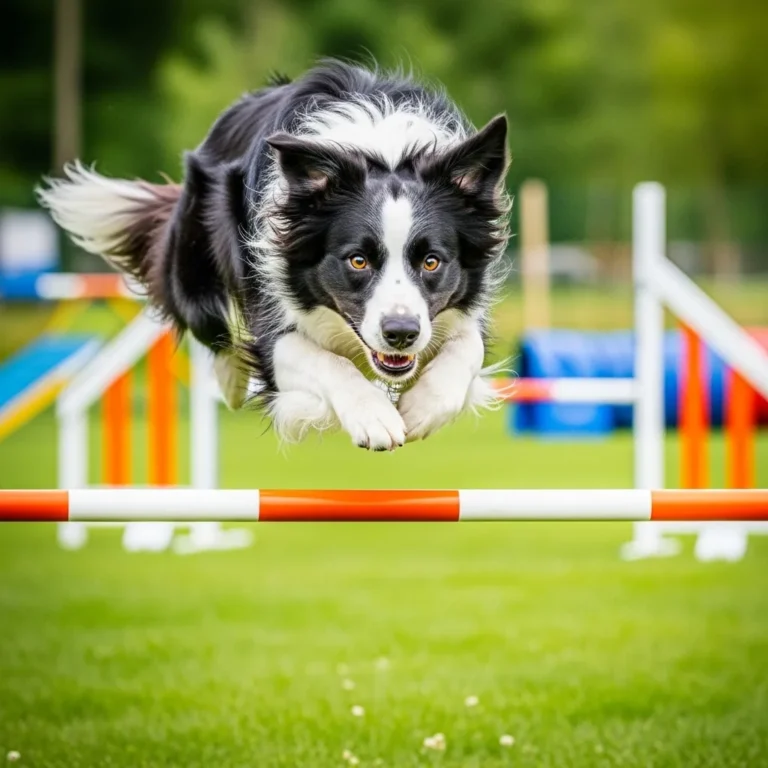
What dog sports (Agility, Flyball, Herding) are best suited for this breed?
Border Collies are stars in:
- Agility — great for speed and sharp turns
- Flyball — perfect for fast learners
- Disc Dog — fantastic for athletic dogs
- Herding Trials — perfect natural fit
- Treibball — herding balls instead of sheep
Look for local clubs through the American Kennel Club (AKC)
How can I teach my dog to walk loosely on a leash without pulling ahead?
Use these steps:
- Reward your dog any time they walk beside you.
- If they pull, stop immediately.
- Wait for the leash to loosen.
- Reward and walk again.
It’s slow but highly effective.
Can I train my Border Collie to be an off-leash dog given their high prey drive?
Yes—but only with:
- Reliable recall
- Long-line practice
- High-value rewards
- Slow exposure to distractions
- Training around motion triggers
Never let a Border Collie off-leash near roads or in unfenced areas until their recall is truly bombproof.
In conclusion, I hope this article has answered the most important question: How to train a border collie dog
Notice : The DogsBlogSS editorial team is dedicated to providing accurate, research-based information about dog health, behavior, and care. All our articles are fact-checked using trusted veterinary sources such as VCA Hospitals, Merck Vet Manual, and the AKC.
you may like it