
Author: DogsBlogSS Team
⚠️ Disclaimer: This article is for informational purposes only and is not a substitute for consulting a veterinarian.
degenerative myelopathy
When a dog begins stumbling, dragging their paws, or walking with a wobble that wasn’t there before, most owners feel a knot tighten in their stomach. It’s even more frightening when the symptoms appear slowly and quietly—almost as if they’re trying to slip past unnoticed. Degenerative Myelopathy (DM) is one of those conditions that tends to creep in gently before it makes itself known.
Many dog owners first hear the term after searching online for explanations, or after a worried conversation with a vet. The learning curve that follows can feel overwhelming—but understanding the condition gives you back a sense of control. This guide walks you through everything you need to know, from early signs to long-term care, using compassionate explanations, real expert advice, and practical help at every stage.
The Basics: Understanding the Condition
What is Degenerative Myelopathy (DM) in Dogs?
According to ivis and National Institutes of Health and Cornell University College of Veterinary Medicine:
Degenerative Myelopathy is a progressive neurological disease that affects a dog’s spinal cord, gradually leading to loss of coordination and hind-limb weakness. Over time, it can move forward along the spinal cord, affecting mobility, bladder control, and eventually the dog’s ability to stand or walk.
The disease is often compared to a quiet breakdown of the nerves that normally carry signals between the brain and legs. Once these fibers begin to deteriorate, the dog loses control—not because of pain, but because communication simply isn’t getting through.
The late Dr. Roger Clemmons, a pioneering neurologist at the University of Florida, spent much of his career studying DM and described it as “a chronic, progressive degeneration of the white matter of the spinal cord.”
What causes DM, and is it genetic?
Yes—DM is strongly linked to a specific genetic mutation in the SOD1 gene. Dogs with two copies of this mutation (called “at-risk” or “homozygous mutant”) have a significantly higher chance of developing the disease.
The Orthopedic Foundation for Animals (OFA) offers the most widely used DM DNA test, confirming the role of the SOD1 mutation.
OFA DM Test:
While genetics play the starring role, experts like Dr. Joan Coates, a veterinary neurologist at the University of Missouri who co-led research identifying the mutation, emphasize that not all genetically at-risk dogs will develop symptoms.
Which dog breeds are most at risk for Degenerative Myelopathy?
According to Cornell University College of Veterinary Medicine, Breeds with the highest known risk include:
- German Shepherds
- Pembroke Welsh Corgis
- Boxers
- Chesapeake Bay Retrievers
- Rhodesian Ridgebacks
- Bernese Mountain Dogs
- Poodles (Standard)
- Golden Retrievers
- Kerry Blue Terriers
However, any dog—mixed or purebred—can test positive for the SOD1 mutation.
Is Degenerative Myelopathy similar to ALS (Lou Gehrig’s Disease) in humans?
Yes, and this comparison comes directly from experts. According to National Institutes of Health, DM shares genetic, clinical, and pathological similarities with human ALS.
Symptoms & Diagnosis: How to Spot It
What are the early warning signs of Degenerative Myelopathy?
According to Cornell University College of Veterinary Medicine:
DM begins subtly—almost invisibly—before symptoms become obvious. Early signs often include:
- Hind-leg weakness
- Wobbly or unsteady gait
- Knuckling (paw turning under while walking)
- Scuffing or dragging nails on the ground
- Difficulty getting up from lying down
- Slipping on smooth floors
- Loss of coordination when turning
Owners often describe it as “clumsiness” or “a strange swagger,” especially on the back legs.
Is Degenerative Myelopathy painful for the dog?
One of the few pieces of good news is that DM is not considered a painful disease.
According to Cornell University College of Veterinary Medicine,confirm that DM involves loss of nerve function, not inflammation or swelling—so the dog does not feel pain from the disease itself.
However, secondary issues such as muscle strain or joint stress can cause discomfort as mobility declines.
How is Degenerative Myelopathy officially diagnosed?
According to Cornell University College of Veterinary Medicine:
There is no single test that confirms DM 100% during life, but veterinarians follow a structured process:
- Neurological exam
- X-rays to rule out disk disease or arthritis
- MRI or CT scan (optional but helpful)
- Bloodwork and thyroid panel
- DNA test (OFA SOD1 test)
- Exclusion of other conditions
A definitive diagnosis is only possible with post-mortem spinal cord analysis, but the above steps create a highly reliable clinical diagnosis.
Can DM be misdiagnosed as arthritis or hip dysplasia?
According to Cornell University College of Veterinary Medicine and ivis:
Absolutely—and this is incredibly common.
Arthritis, hip dysplasia, and intervertebral disk disease all cause mobility problems, but they usually cause pain, while DM does not.
A vet familiar with DM will look carefully for:
- Symmetrical hind-limb weakness
- Lack of pain during manipulation
- Absence of joint swelling
- Normal bloodwork
- Progressive worsening over months
Is there a DNA test available for DM, and how accurate is it?
According to Cornell University College of Veterinary Medicine and ivis:
Yes—OFA’s test is the gold standard.
- Clear: No mutation
- Carrier: One mutation copy
- At-risk: Two mutation copies (highest risk)
But here’s the nuance many owners miss:
Having two mutations does not guarantee a dog will develop DM.
Progression & Life Expectancy: What to Expect
What is the life expectancy of a dog after a DM diagnosis?
According to Cornell University College of Veterinary Medicine and ivis:
Most dogs live 1 to 3 years after noticeable symptoms appear.
The timeline varies based on:
- The dog’s size
- Physical therapy involvement
- Overall health
- Stage at diagnosis
Corgis often progress more slowly, while large breeds may progress more quickly.
How fast does Degenerative Myelopathy progress?
On average:
- Early stage: 3–6 months
- Mid stage: 6–12 months
- Late stage: 3–12 months
Some dogs experience a slower, gentler decline, especially if they receive consistent exercise and therapy.
What are the stages of Degenerative Myelopathy?
According to Veterinary Teaching Academy:
Early Stage
- Wobbling
- Hind-leg weakness
- Dragging nails
- Occasional stumbling
- Difficulty rising
Mid Stage
- Noticeable muscle loss
- Crossing back legs
- Trouble standing for long
- Falling more frequently
Late Stage
- Complete hind-limb paralysis
- Loss of bladder/bowel control
- Weakness moving toward front legs
- Pressure sores from immobility
End Stage
- Full paralysis
- Breathing difficulties
- Inability to stand or reposition
- Total loss of mobility
Can the progression of DM be stopped or slowed down?
According to National Institutes of Health and Cornell University College of Veterinary Medicine:
There is no cure, but the progression can be slowed through:
- Daily physical therapy
- Underwater treadmill
- Strengthening exercises
- Regular moderate walks
- Controlled diet and supplements
- Mobility aids
Colorado State University’s research team reports that dogs receiving regular physical therapy often enjoy significantly longer quality-of-life periods.
Treatment, Management & Quality of Life
Is there a cure or medical treatment for Degenerative Myelopathy?
According to National Institutes of Health and Cornell University College of Veterinary Medicine:
As of now, no cure exists.
However, therapies can help improve mobility, strength, and overall comfort:
- Canine physiotherapy
- Hydrotherapy
- Acupuncture
- Laser therapy
What physical therapy exercises help dogs with DM?
According to National Institutes of Health and Cornell University College of Veterinary Medicine:
According to veterinary rehab specialists like Dr. David Levine, co-author of Canine Rehabilitation and Physical Therapy, DM dogs benefit most from low-impact, muscle-preserving activity.
Effective exercises include:
- Underwater treadmill therapy
- Assisted standing
- Slow, controlled leash walks
- Weight-shifting exercises
- Walking over ground poles
- Hind-leg range-of-motion stretches
Owners often find that consistent therapy becomes a bonding ritual—a way to support their dog both physically and emotionally.
Are there supplements or dietary changes that support dogs with DM?
According to National Institutes of Health and Cornell University College of Veterinary Medicine and Canine Arthritis And Joint:
Many veterinarians recommend:
- Omega-3 fatty acids
- Antioxidants (Vitamin E, Vitamin C)
- B-complex vitamins
- Aminocaproic acid (some evidence)
- N-acetylcysteine
- High-quality lean protein
These do not cure DM but may slow nerve degeneration and support general wellness.
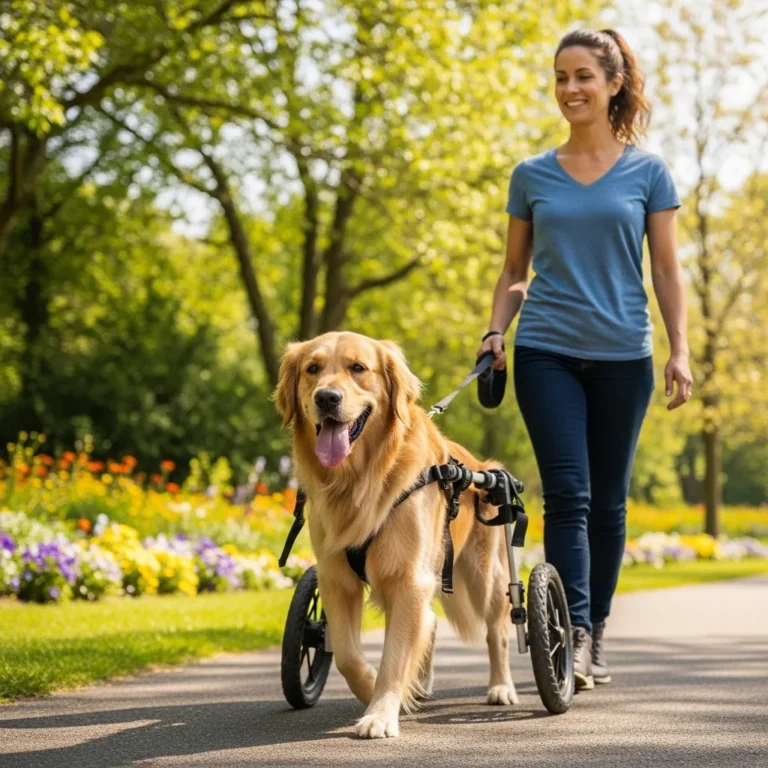
When should I consider a wheelchair or mobility cart for my dog?
A mobility cart can dramatically improve a dog’s independence. Signs it’s time:
- Difficulty walking more than a few steps
- Dragging hind legs
- Frustration during walks
- Frequent collapsing
Companies like Walkin’ Wheels offer adjustable carts that support DM dogs through gradual decline.
How do I manage bladder and bowel incontinence in later stages?
According to The Dogington Post:
Helpful strategies include:
- Expressing the bladder manually (your vet can teach you)
- Waterproof bedding
- Diapers or belly bands
- Frequent potty breaks
- Skin-protecting balms to prevent irritation
- Cleaning wipes for hygiene
Many owners are surprised how manageable this is once they find a routine.
End-of-Life Decisions: The Hardest Questions
How do I judge the quality of life for a dog with DM?
According to Animal Health Foundation and Animal Health Foundation:
Veterinarians often use HHHHHMM:
- Hurt
- Hunger
- Hydration
- Hygiene
- Happiness
- Mobility
- More good days than bad
When is the right time to euthanize a dog with Degenerative Myelopathy?
There is no universal answer—but common indicators include:
- Complete paralysis
- Inability to reposition
- Chronic infections
- Loss of all mobility
- Breathing difficulties
- Lack of joy or engagement
Most veterinarians emphasize this: Don’t wait until your dog is suffering. DM itself isn’t painful, but complications can be.
What are the signs that the disease has reached its final stage?
- Total paralysis of all limbs
- Labored breathing
- Loss of bladder and bowel control
- Pressure sores and infections
- Extreme weight loss
- Inability to lift their head or reposition
This stage is heartbreaking, but it allows owners to prepare emotionally and make compassionate decisions.
Notice : The DogsBlogSS editorial team is dedicated to providing accurate, research-based information about dog health, behavior, and care. All our articles are fact-checked using trusted veterinary sources such as VCA Hospitals, Merck Vet Manual, and the AKC.
you may like it