
Author: DogsBlogSS Team
⚠️ Disclaimer: This article is for informational purposes only and is not a substitute for consulting a veterinarian.
Can Dogs Eat Cabbage? A Complete Guide for Dog Owners
Cabbage is one of those foods that many dog owners hesitate to share. You’re chopping up a salad or cooking dinner, and your dog is staring up at you with that familiar “please drop something” expression. Before handing over a crunchy green leaf, it’s natural to wonder: Can dogs eat cabbage? Is it safe? Healthy? Or a food to avoid?
This comprehensive guide walks you through everything you need to know — from safety concerns and serving tips to health benefits and expert advice from trusted veterinarians like Dr. Jerry Klein (Chief Veterinary Officer, AKC) and Dr. Katy Nelson (Senior Vet, Chewy).
So, let’s break it all down in the friendliest, clearest way possible.
The Essentials: Safety and Preparation
Can dogs eat cabbage safely?
Yes — dogs can eat cabbage safely, and many actually enjoy its crunchy texture. According to Dr. Jerry Klein of the American Kennel Club (AKC), cabbage is generally considered safe for dogs when fed in small, reasonable portions. It’s low in calories and high in beneficial nutrients, especially antioxidants and vitamins.
Is raw or cooked cabbage better for dogs?
According to petmd and American Kennel Club:
Both forms are safe, but they offer different benefits:
- can dogs eat cabbage raw: crunchy, hydrating, and rich in nutrients — but may cause gas.
- can dogs eat cooked cabbage: gentler on digestion, especially if lightly steamed or boiled.
Most veterinarians, recommend lightly cooking cabbage to reduce gas-producing compounds while keeping nutrients intact.
Can dogs eat steamed or boiled cabbage?
According to petmd and American Kennel Club:
Absolutely. In fact, steamed or boiled cabbage is the preferred method for many dogs because it breaks down fibers and reduces compounds that cause gas.
Avoid:
❌ Oils
❌ Butter
❌ Salt
❌ Seasonings
Just keep it plain and simple.
Is cabbage toxic to dogs in any amount?
According to petmd and American Kennel Club: No, cabbage is not toxic. However, feeding too much can lead to digestive discomfort. Very large amounts may affect thyroid function due to compounds called thiocyanates, but a normal serving is perfectly safe for healthy dogs.
Types and Parts of Cabbage
Dog owners often wonder whether color or variety matters — let’s clear that up.
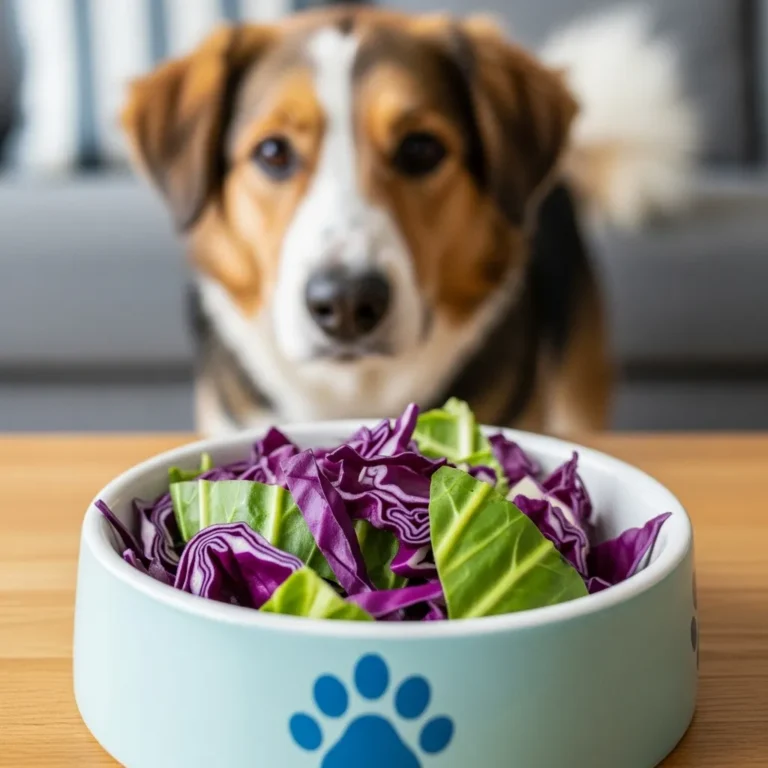
Can dogs eat red or purple cabbage?
According to petmd and American Kennel Club: Yes, and it’s actually more nutritious than green cabbage. Red cabbage is rich in antioxidants such as anthocyanins. Dogs benefit from these in small amounts, especially for immune support.
Can dogs eat Napa or Savoy cabbage?
According to petmd and American Kennel Club: Yes — all cabbage varieties are dog-friendly, including:
- Napa cabbage
- Savoy cabbage
- Green cabbage
- Red cabbage
They differ in texture and flavor but are equally safe when served plain.
Is it safe for dogs to eat the cabbage core (heart) or stalks?
According to petmd and American Kennel Club: Safe, but not ideal.
- The core is very firm and can be difficult to digest.
- For small dogs, it could pose a choking hazard.
If you choose to feed the core, chop it into tiny pieces and cook it well.
Can dogs eat the outer leaves of the cabbage?
According to petmd and American Kennel Club: Safe, but not ideal.Yes. The outer leaves are safe but can sometimes be tougher and may carry dirt or pesticides. Always:
✔ Wash thoroughly
✔ Cook lightly
✔ Cut into manageable pieces
Health Benefits and Nutritional Value
Dog owners often ask why they should even consider adding cabbage to their dog’s diet. The truth? This humble vegetable has a surprising number of perks.
What are the health benefits of cabbage for dogs?
According to petmd and American Kennel Club:
Cabbage is rich in vitamins and minerals, including:
- Vitamin C — immune support
- Vitamin K — bone health
- Vitamin B6 — metabolism support
- Fiber — digestive health
- Antioxidants — anti-inflammatory benefits
Cabbage also contains phytonutrients that may help support detoxification processes.
Is cabbage a good source of fiber for dogs?
According to petmd and American Kennel Club:
Very much so. Fiber helps:
- Regulate bowel movements
- Improve stool quality
- Support gut bacteria
Just don’t overdo it — too much fiber at once can cause stomach discomfort.
Can cabbage help with a dog’s digestion or weight loss?
According to petmd and American Kennel Club: In moderation, yes.
- Its low-calorie, high-fiber nature makes it excellent for weight-conscious dogs.
- Some owners use cabbage as a filler to help dogs feel full without adding unnecessary calories.
However, sudden introduction of large portions may result in gas or bloating, so slow and steady is best.
Risks, Side Effects, and Medical Concerns
No food is perfect, and cabbage does come with a few things to watch for.
Does cabbage cause gas or bloating in dogs?
According to petmd and American Kennel Club: Yes — this is the most common issue.
Cabbage contains sulfur-based compounds that can make dogs a bit gassy. This isn’t harmful, but it can be uncomfortable or… fragrant.
Reducing gas:
✔ Cook it lightly
✔ Serve small portions
✔ Introduce gradually
Is cabbage bad for dogs with thyroid problems?
According to petmd and American Kennel Club:Here’s where the thiocyanates come in.
In very large amounts, these compounds can affect dogs with existing thyroid issues. According to veterinary endocrinologists, moderate servings do not cause thyroid dysfunction, but dogs with hypothyroidism should avoid frequent or large amounts of raw cabbage.
If your dog has thyroid disease, consult your vet before introducing cabbage.
Can puppies eat cabbage?
According to petmd and American Kennel Club: Puppies can eat cabbage — but with caution.
Because puppies have more sensitive digestion, start with tiny cooked portions and watch for reactions. Their primary nutrition should always come from a complete puppy food formula.
Cabbage-Based Dishes (What to Avoid)
A major issue many dog owners face is confusing plain cabbage with human dishes that contain cabbage. These are very different in terms of safety.
Can dogs eat coleslaw?
According to American Kennel Club
No.
Coleslaw often contains:
❌ Mayonnaise
❌ Sugar
❌ Vinegar
❌ Salt
❌ Seasonings
❌ Onion powder
This makes it unsuitable for dogs.
Can dogs eat sauerkraut?
According to feedingdogs and Dial A Vet: Sometimes — but usually not recommended.
Sauerkraut is cabbage fermented with salt. The sodium levels are often way too high for dogs. Some versions also contain caraway seeds, which are toxic to dogs.
Can dogs eat stuffed cabbage rolls?
According to Canine Bible:
No.
Most stuffed cabbage dishes contain:
❌ Onions
❌ Garlic
❌ Spices
❌ Tomato sauces (acidic)
❌ Oils
These are harmful to dogs.
Can dogs eat pickled cabbage (Kimchi)?
According to petcareadvisors and Can Dogs Eat It: Absolutely not.
Kimchi is spicy, fermented, and high in sodium — a dangerous combination for dogs.
Feeding Guidelines: Quantity and Frequency
Now that we know cabbage is safe, let’s go over how much your dog can actually have.
How much cabbage can I give my dog?
A good rule of thumb:
- Small dogs: 1–2 tablespoons
- Medium dogs: 2–¼ cup
- Large dogs: ¼ to ½ cup
Always adjust based on your dog’s reaction.
How often can dogs eat cabbage?
According to American Kennel Club:
2–3 times a week is ideal.
Daily large servings are unnecessary and may increase gas or affect thyroid function in susceptible dogs.
How should I prepare cabbage for my dog?
Keep it simple:
Preparation Tips
- Wash thoroughly
- Remove tough stalks if needed
- Chop into small pieces
- Lightly steam or boil
- Let cool before serving
Avoid:
❌ Salt
❌ Butter
❌ Spices
❌ Oils
❌ Garlic or onion
Plain cabbage is always the safest option.
Final Thoughts
Cabbage can be a healthy, tasty, and low-calorie treat for dogs when served properly. It’s full of nutrients, helpful for digestion, and a fun crunchy snack when given in moderation. Just remember to introduce it slowly, cook it lightly to reduce gas, and avoid seasoned or pickled dishes.
With simple preparation and common-sense portions, your dog can safely enjoy this nutritious vegetable as part of a balanced diet.
Notice : The DogsBlogSS editorial team is dedicated to providing accurate, research-based information about dog health, behavior, and care. All our articles are fact-checked using trusted veterinary sources such as VCA Hospitals, Merck Vet Manual, and the AKC.
you may like it